






EMR welcomes the UK Gigafactory Commission’s report
Olivia Healey
2026-02-04
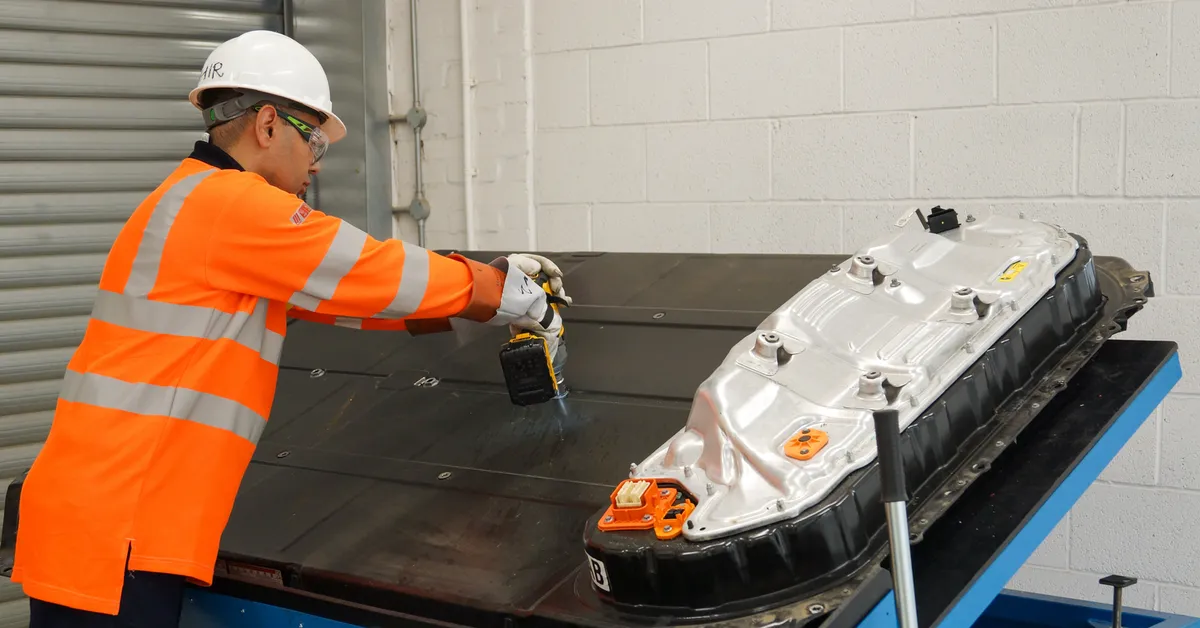
Electrification is essential for a low-carbon future, but it only works if we manage the lifecycle of the batteries that are powering the energy transition. At EMR, we work with manufacturers at every stage of the journey, to ensure maximum materials can be recovered, repurposed and recycled from every electric vehicle (EV) battery when it reaches the end of its intended life. Turning today’s used batteries into tomorrow’s useful battery materials.
Listen to this story
Battery recycling is more than waste management; it is about supply chain security. At EMR, we focus on recovering high-value, finite materials such as lithium, cobalt and nickel so they can be put back into the circular economy. By keeping these resources in circulation, we avoid the need for carbon-intensive mining and reduce the environmental impact of the automotive sector.
From supporting design-for-recycling at the development stage, to supplying recycled, lower-carbon metals and polymers and responsibly managing end-of-life materials, we work with manufacturers across the automotive lifecycle to reduce waste, cut carbon and unlock additional value.
We welcome the UK Gigafactory Commission’s report as a validation of this approach. Battery manufacturing and the systems and processes used to supply and recover critical materials must be developed together if the UK is to remain globally competitive. Batteries are no longer simply components within vehicles; they are strategic assets that underpin industrial resilience, resource security and long-term economic growth.
Securing gigafactory investment is essential, but it is only one part of the equation. Long-term success depends on the strength of the wider system, particularly the availability of domestic capability to recover, reuse and recycle materials at scale. As EVs move from early adoption to mass deployment, the volume, variety and complexity of batteries entering the system will increase rapidly. If that growth is not matched by design choices that enable reuse and recycling, the challenge will intensify over time. Decisions made now will determine how much value can ultimately be recovered. Acting early is essential to maintaining material security, improving recovery outcomes and reducing long-term exposure to global supply chain volatility.
As EV batteries reach end of life in growing volumes, recycling will become a primary source of critical materials. Without sufficient domestic recycling capability, materials recovered from UK vehicles are often processed elsewhere, leaving manufacturers exposed to supply risk, higher costs and reduced access to recovered materials — even when those materials are already within the UK system. For EMR, recycling is not a downstream activity; it is a strategic enabler that directly supports manufacturing resilience and competitive advantage.
This approach underpins EMR’s early investment in practical, industrial-scale solutions. Anticipating the technical, safety and operational challenges associated with EV batteries, EMR led RECOVAS — a pioneering partnership, part-funded through the Advanced Propulsion Centre — which established the UK’s first circular supply chain for EV batteries. By collaborating with major vehicle manufacturers, academic partners and industry innovators, RECOVAS delivered a clear blueprint for how the UK can manage growing volumes of end-of-life EV batteries safely and sustainably.
Through RECOVAS, EMR put a clear, triage-led system into practice, ensuring every battery is routed to the outcome that delivers the most value. Batteries in the best condition are reused. Those still operational are redeployed into second-life applications. Where recycling is the right option, materials are recovered safely and efficiently and returned to the circular economy. The result is a circular system that works in the real world, at scale, with safety, quality and traceability built in from the start.
The insights from RECOVAS directly informed the design and delivery of EMR’s purpose-built EV battery recycling facility in Birmingham. Unlike legacy infrastructure adapted for new battery chemistries, the site was designed around EV batteries from the outset, incorporating safe handling, testing, disassembly and materials recovery processes tailored to the demands of modern electric vehicles.
Alongside batteries, EMR is advancing circular solutions across the wider automotive value chain, applying end-of-life insight to a broader range of components and materials. Through its involvement in the CirculaREEconomy (CREEM) programme, EMR is helping to develop practical approaches to recovering rare earth magnets from electric motors — materials that are critical to electrification and increasingly exposed to global supply risk.
EMR’s Circularity Labs provide a space for deeper collaboration with manufacturers, bringing together engineers, designers and recycling specialists to test how real vehicles and components behave at end-of-life. By working directly with OEMs, EMR helps translate on-the-ground experience into better design decisions, from magnet assemblies and electrical systems to connectors, cabling and battery casings.
Together, this work helps unlock new value streams, improve material recovery and reduce future recycling costs, while ensuring materials remain in productive use for longer as the automotive sector continues to evolve.
Looking ahead, early intervention remains critical. Many of the decisions that determine whether reuse and recycling are viable at scale are made long before a vehicle reaches end-of-life. Choices around materials, pack architecture, joining methods and data accessibility directly influence safety, disassembly efficiency and material recovery outcomes.
As the UK moves to deliver gigafactory-scale infrastructure, this is the opportunity to embed circularity by design. The engineering decisions being made today will determine whether a truly circular battery supply chain can be achieved tomorrow — one that retains materials, skills and expertise within the UK.
Building that system will require pace, coordination and partnership across the supply chain. Recycling, reuse and materials recovery are strategic enablers of resilience and competitiveness. EMR is already demonstrating how these capabilities can be delivered at scale, and we stand ready to work with industry and government to support a robust, circular and globally competitive battery supply chain for the UK.